Technical Library · Replacement-006
Spare Transformer Interchangeability Matrix: Electrical, Mechanical and Documentation Compatibility
Engineering reference prepared by TransformerGrid · Project-specific requirements require manufacturer, utility and qualified-engineer verification.
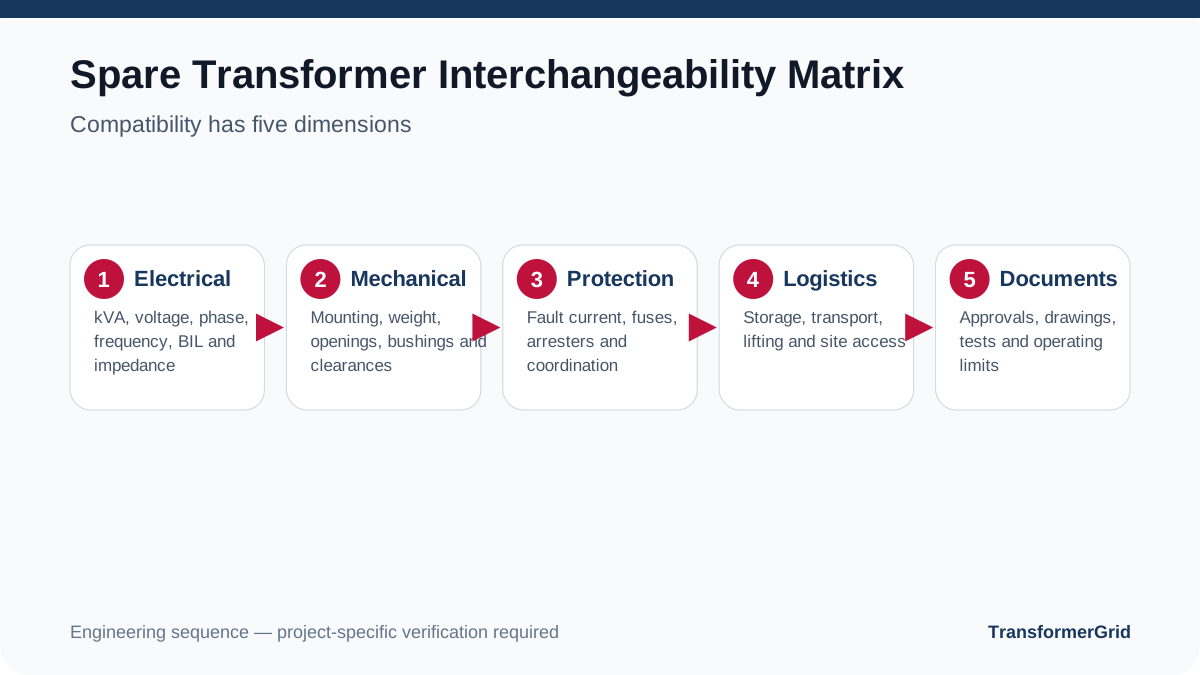
A Shared Spare Must Be Proven Interchangeable
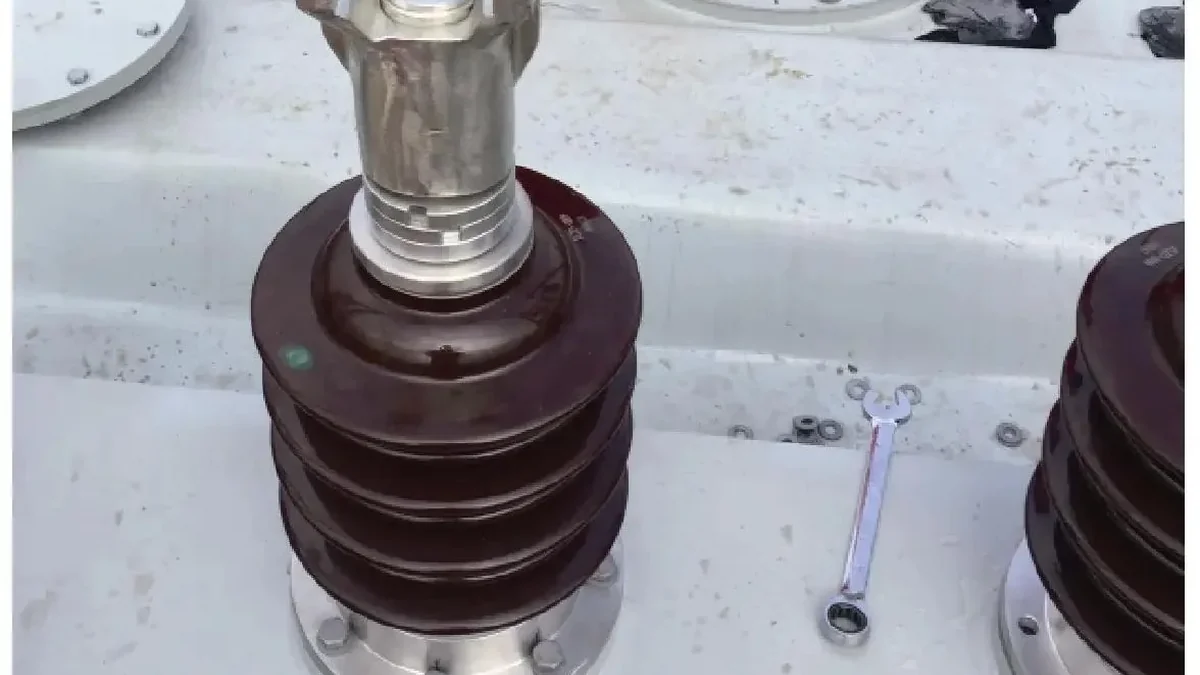
Spare standardization is not the effort to minimize inventory at any cost. Its purpose is to restore critical sites with a controlled number of assets and acceptable technical risk.
Similar kVA or appearance does not establish interchangeability. A usable shared spare must satisfy electrical, mechanical, protection, logistics and documentation conditions for each intended site.
Three Spare Strategies
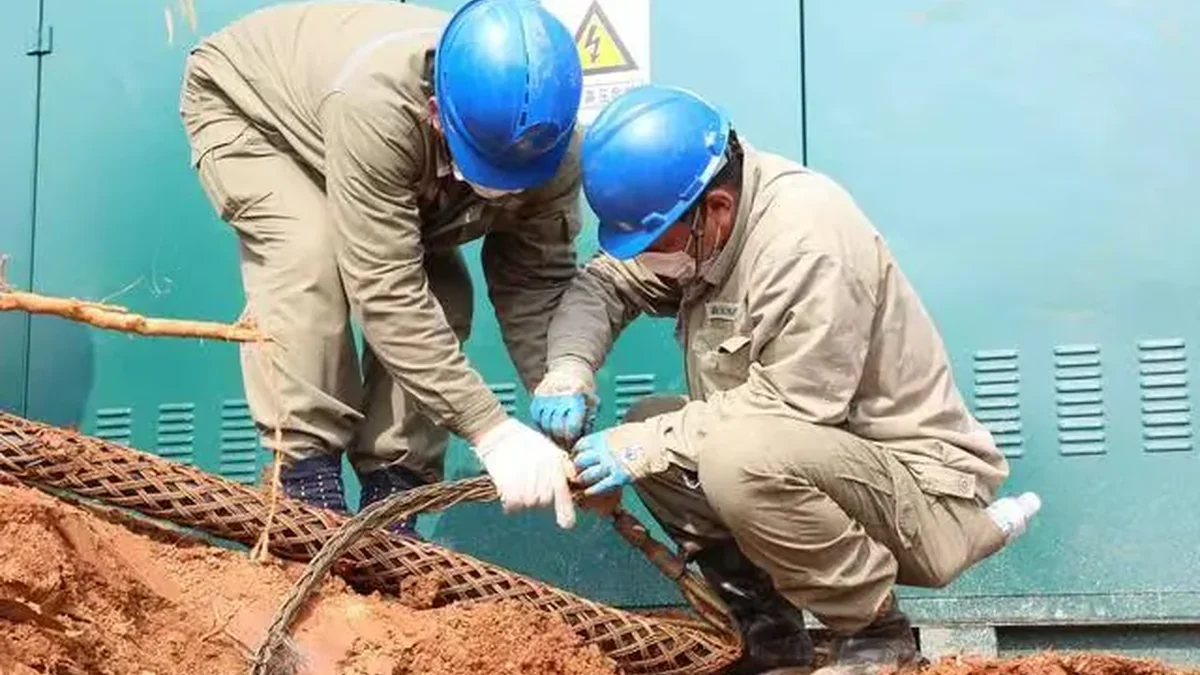
Exact-match spare: closely matches one critical installed unit. Deployment risk is low, but inventory cost is high.
Flexible spare: uses a verified tap range, planned accessories or pre-engineered adapters to serve a defined group of sites. It must not depend on improvised field rewiring after a failure.
Family strategy: groups sites into compatible families—for example, one voltage and mounting family for pole-mounted units and another for pad-mounted units. This is often more realistic than one spare for every transformer.
Electrical Compatibility Matrix
Verify kVA, primary and secondary voltage, phase, frequency, BIL, impedance, taps, connection, neutral, grounding, losses and permitted loading.
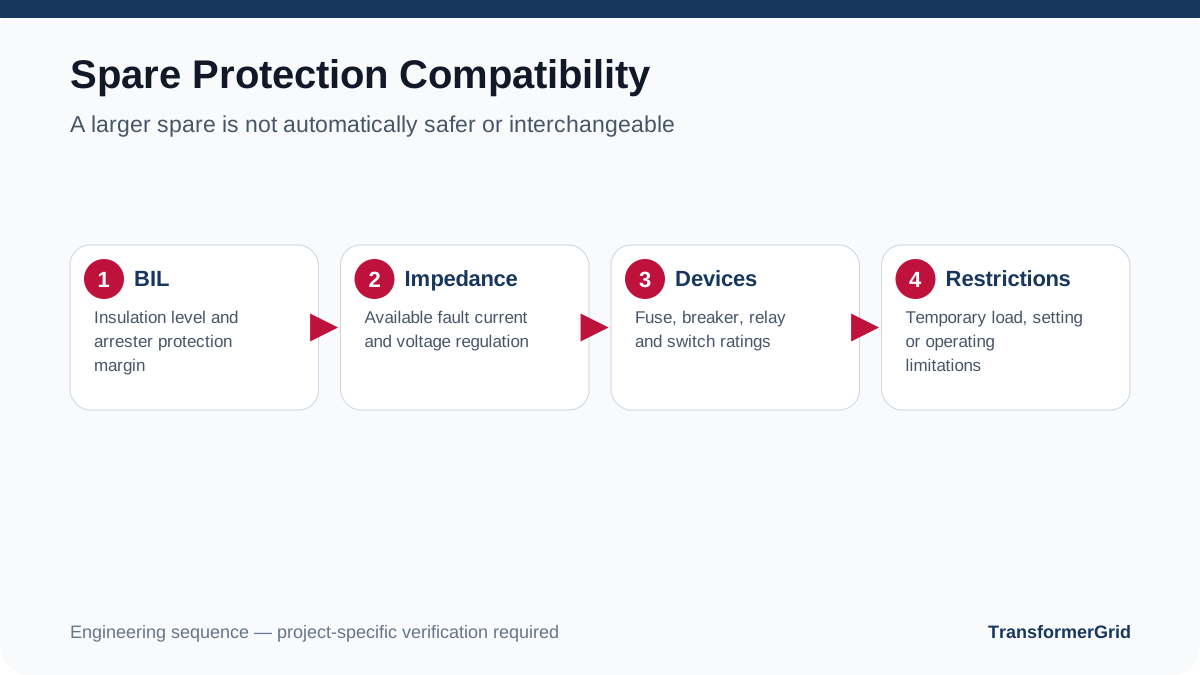
A spare with higher kVA is not automatically acceptable. Protection, fault current, low-voltage equipment, mounting weight and actual load must still be reviewed. A smaller spare requires a defined temporary load-shedding strategy.
Mechanical and Site Compatibility
For pole-mounted equipment, check single- or two-pole construction, bracket and hole spacing, weight, centre of gravity, lifting points, bushing position, conductor space and pole capacity.
For pad-mounted equipment, check pad dimensions and openings, cable entry, HV/LV compartments, bushings and terminations, door swing, maintenance clearances, bollards and drainage.
Where interfaces are not exact, adapters and limitations should be engineered and approved before the emergency—not improvised during the outage.
Protection, Utility and Document Compatibility
Confirm fuses, arresters, switches, relays, short-circuit ratings, grounding and upstream/downstream coordination. Differences in impedance or BIL may change the protection analysis.
The spare file should contain approved drawings, nameplate, tests, intended-site list, temporary operating restrictions, adapter list, storage records and activation checklist. Approval for one site does not automatically authorize use at another.
Interchangeability Classes and Temporary Operating Limits
A practical asset register can classify each intended site as directly interchangeable, interchangeable with approved adapters or setting changes, temporary emergency use with load restrictions, or not interchangeable. The classification should be supported by drawings, calculations and utility review where required.
Temporary operating limits should be explicit. Examples include a maximum load, prohibited motor starting, a revised fuse or relay setting, restricted tap position, temporary cable arrangement, increased inspection frequency or a deadline for installing the permanent replacement. A spare is not truly standardized when the operating team must rediscover these limits during an emergency.
Preservation and Activation
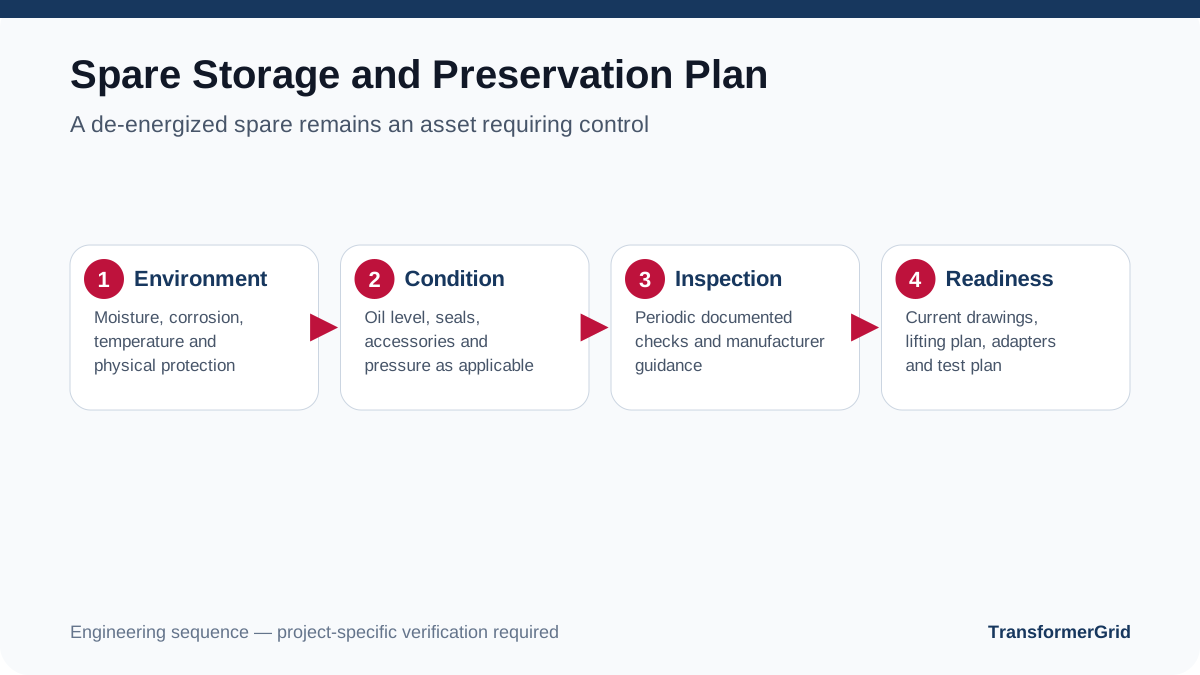
Stored equipment should follow manufacturer and project requirements for moisture, corrosion, oil level, sealing, accessories, heaters where applicable and periodic documented inspection.
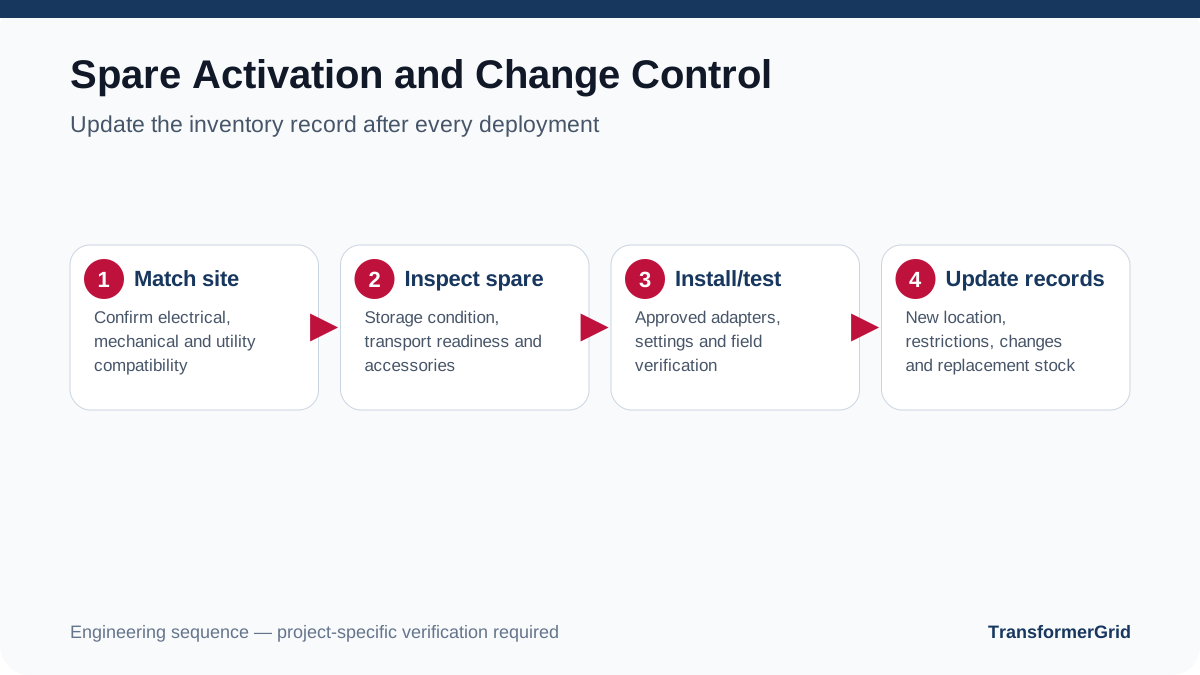
Before activation, reconfirm site compatibility, spare condition, transport and lifting, protection, tests, temporary operating limits and approval responsibility. After deployment, update the asset register so the unit is not mistakenly shown as available inventory.
Related buying guide: Read the commercial decision guide that applies this technical framework to cost, scope and RFQ review.
FAQ
Can one larger spare replace all smaller units?
Not from kVA alone. Voltage, impedance, protection, weight, interfaces, low-voltage system and operating restrictions must be reviewed.
Can taps solve different primary-voltage requirements?
Only within the designed tap range and intended purpose. Taps are not an unrestricted voltage-conversion feature.
Does a stored transformer need maintenance if it is never energized?
Yes. Storage environment, sealing, oil, accessories and insulation condition require periodic control according to applicable guidance.
This Technical Library page is educational. Project design, protection settings, construction, permits and energization must be completed by the utility and appropriately qualified local parties. TransformerGrid coordinates RFQ clarification, drawings, documents, FAT and export delivery with verified manufacturing partners.