State Grid Heilongjiang Transformer Supply Reference: Extreme Cold, Winter Reliability and Power Distribution Requirements
When planning a cold-region transformer project, project owners, EPC contractors, and procurement engineers must carefully evaluate extreme environmental challenges before placing an order. A State Grid Heilongjiang transformer supply reference serves as a critical benchmark, demonstrating exactly why deploying a robust transformer for freezing environments is non-negotiable for power distribution grid reliability.
Why State Grid Supply References Matter
The State Grid Corporation of China operates one of the most extensive and demanding power networks globally. Their procurement standards are famously rigorous. When a manufacturer achieves a State Grid supply reference, it proves they have passed strict technical evaluations, factory audits, and performance testing. This gives international buyers immense confidence in the manufacturer's consistency, quality control, and proper transformer documentation review processes.
Why Heilongjiang Matters
Heilongjiang is China's northernmost province, known for its extreme subarctic climate. With long, punishing winters and temperatures frequently dropping well below -30°C (-22°F), this region provides one of the ultimate tests for outdoor electrical infrastructure. Surviving here requires far more than standard specifications; it demands exceptional transformer sealing, insulation, and overall build quality.
Extreme Cold Snow Ice and Winter Reliability Risk
Operating a power distribution transformer in sub-zero conditions introduces severe operational threats. Extreme cold can cause standard transformer oil to thicken, severely reducing cooling efficiency and dielectric strength. Standard gaskets and seals become brittle and fail, allowing moisture ingress. Furthermore, ice and snow accumulation on bushings can lead to tracking and catastrophic flashovers. A pole mounted transformer or pad mounted transformer deployed here must feature specialized cold-weather enhancements to ensure continuous, safe operation.
Selected State Grid Heilongjiang Transformer Supply Reference
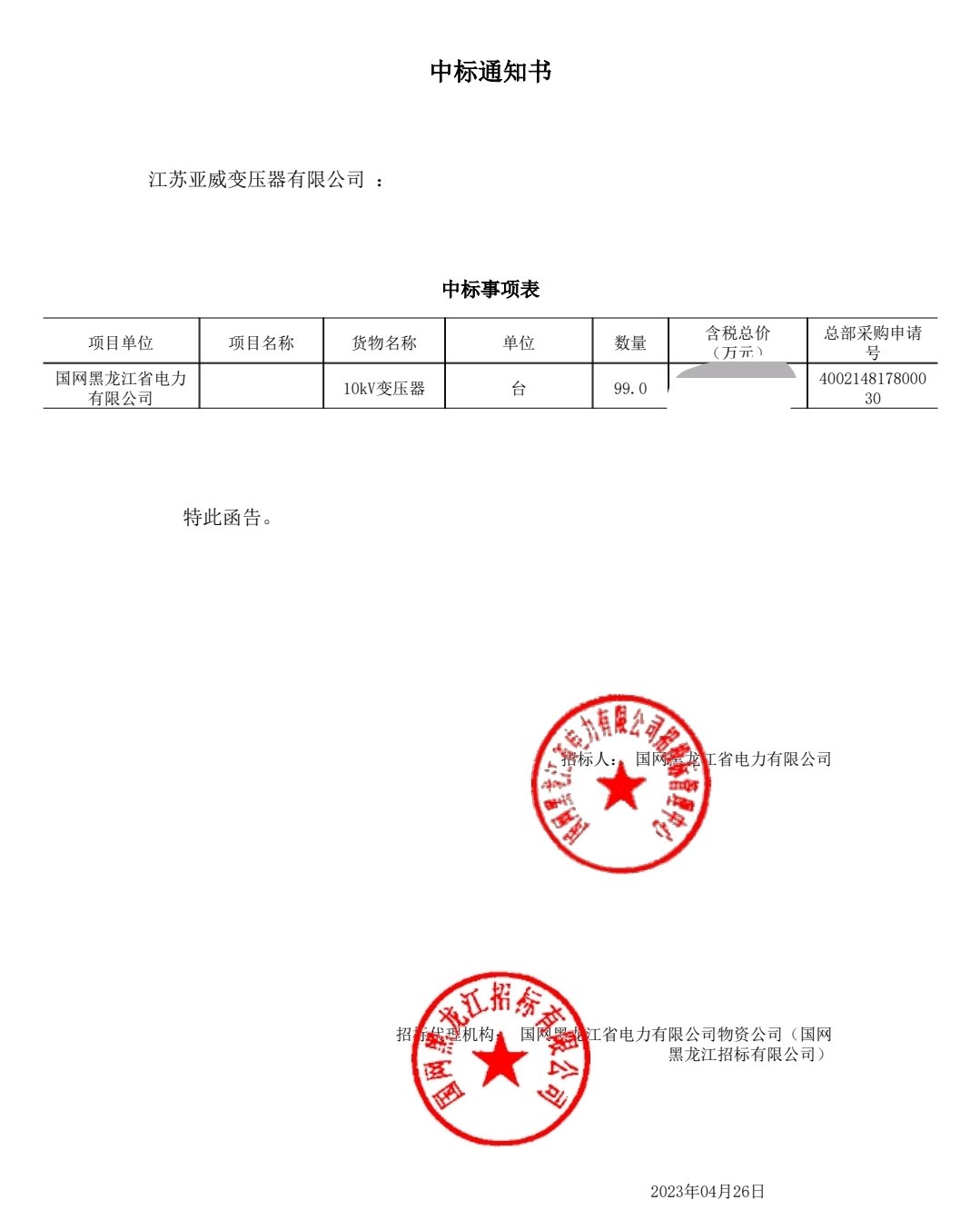
Heilongjiang is one of China's coldest northern provinces. Its long winter, snow, ice and very low temperatures can create demanding requirements for transformer sealing, insulation, oil performance and long-term outdoor reliability.
English Summary of the Tender Notice
| Project Detail | Information |
|---|---|
| Document Type | Bid-Winning Notice / Tender Award |
| Project Region | Heilongjiang Province, China (Extreme Cold) |
| Equipment Type | Transformer Equipment |
| Manufacturer Referenced | Jiangsu Yawei Transformer Co., Ltd. |
| Environmental Context | Extreme low temperature, heavy snow, and ice conditions requiring high winter reliability |
Disclaimer: Sensitive commercial details may be masked or redacted. This notice is presented strictly as a supply reference demonstrating capacity for extreme cold environments, not as an official State Grid endorsement or certification.
What This Reference Means for Transformer Buyers
For international buyers, this State Grid Heilongjiang transformer supply reference indicates that the manufacturing standards applied to these transformers meet the rigorous procurement criteria for extreme low-temperature operations. Surviving the Heilongjiang winter requires stringent quality control during tank fabrication, oil selection, sealing, and final assembly to ensure peak oil performance and transformer corrosion resistance against freezing moisture. This level of quality is essential for utility transformer procurement where reliability is paramount.
Why Cold-Region Transformer Projects Need Careful Specification Review
Whether you are procuring a pole mounted transformer or a pad mounted transformer, the specification must match the installation site. Cold-region areas demand specialized engineering. A standard inland transformer deployed in freezing conditions will likely experience premature failure. Proper transformer documentation review is essential to verify that the manufacturer understands and has accounted for cold-climate requirements. For a deeper dive into preventing these issues, read our winter failure analysis for pole mounted transformers.
What Buyers in Cold Regions Should Confirm Before Quotation
| Verification Item | Why It Matters for Cold Projects |
|---|---|
| Transformer Oil Grade | Requires low-pour-point insulating oil (e.g., 45X) to maintain flow and dielectric strength in sub-zero temperatures. |
| Sealing Technology | Gaskets must be made of low-temperature resistant materials (like special nitrile or silicone) to prevent embrittlement and leaks. |
| Bushing Creepage Distance | Extended creepage prevents ice and snow buildup from bridging the gap and causing flashovers. |
| Test Reports Verification | A thorough transformer test report review ensures the unit has passed cold-start and extreme temperature endurance tests. |
How TransformerGrid Supports Cold-Climate Transformer Projects
Navigating cross-border procurement for strict utility or extreme-weather projects carries inherent risk. At TransformerGrid, we support buyers by ensuring meticulous transformer documentation review before any manufacturing begins. We help you define the exact technical specifications needed for your frozen environment.
Furthermore, we supply complete transformer export documentation and verify every transformer test report, ensuring the equipment you receive matches the high standards demanded by extreme cold applications.
Conclusion
A cold-region transformer installation leaves no room for manufacturing shortcuts. Utilizing benchmarks like the State Grid Heilongjiang transformer supply reference helps buyers understand the level of sealing, insulation, oil performance, and build quality required. By focusing on stringent specifications and working with experienced supply partners, project managers can ensure the long-term reliability of their power distribution transformer assets in even the most extreme winter environments.
Need Support for Your Project?
Contact our engineering team to review your drawings, specifications, and environmental requirements before you request a quotation. We provide step-by-step guidance for cold-climate and high-requirement projects.