Step Up or Step Down Transformer? How Nina Confirmed Voltage Direction Before Ordering a Pole or Pad Transformer
When purchasing electrical distribution equipment, a simple misunderstanding of terminology can lead to severe project delays and costly errors. Nina, a procurement manager handling equipment for a growing industrial and commercial development, faced this exact situation. Her engineering team handed her a preliminary equipment list that included several distribution units marked "11kV / 400V, 1000kVA." While this seemed straightforward, it omitted one crucial detail: the direction of power flow.
Without clarifying whether the project required a step up transformer or a step down transformer, Nina risked requesting quotations for equipment that could not be safely connected to the grid. This guide explains the fundamental differences between step up and step down configurations, how to correctly identify primary and secondary voltages, and how Nina successfully navigated the specification process before ordering her pole mounted and pad mounted transformers.
Why Nina Did Not Send RFQ Before Confirming Voltage Direction
Nina knew that sending incomplete technical specifications to overseas manufacturers often results in inaccurate pricing, or worse, ordering the wrong equipment. In the electrical industry, writing "11kV / 400V" does not automatically mean the power comes in at 11kV and goes out at 400V. In a solar park application, the power might enter at 400V from the inverters and exit at 11kV to connect to the utility grid.
If Nina had sent a generic Request for Quotation (RFQ) without confirming the voltage direction, the supplier might have assumed standard step down distribution and designed the internal core and winding insulation accordingly. A transformer built specifically to step down voltage cannot always simply be installed in reverse to step up voltage, due to differences in insulation grading, tap changer placement, and inrush current characteristics. Realizing this, Nina paused her RFQ process to thoroughly investigate the project drawings.
What Is a Step Up Transformer?
A step up transformer is designed to increase the voltage from the primary winding (input) to the secondary winding (output). To achieve this, the secondary coil has a greater number of wire turns than the primary coil. According to the principles of electromagnetic induction, the voltage increases in direct proportion to the ratio of these turns.
As the voltage increases, the current decreases proportionally (assuming power remains constant, minus minor losses). Step up transformers are critical for transmitting electrical energy over long distances, as higher voltages significantly reduce power loss in transmission lines. They are most commonly found at power generation plants, including wind and solar facilities, where a step-up transformer for solar or wind projects is used to match the relatively low generation voltage to the high-voltage transmission grid.
What Is a Step Down Transformer?
A step down transformer performs the exact opposite function: it decreases the voltage from the primary winding to the secondary winding. In this configuration, the primary coil has more turns than the secondary coil.
This is the most common type of transformer used in end-user electrical distribution. High-voltage electricity from the transmission or distribution grid is dangerous and unusable for typical machinery, commercial buildings, or residential homes. A step down transformer reduces this high utility voltage (e.g., 11kV, 13.8kV, or 33kV) to safe, usable consumer voltages (e.g., 400V, 480V, or 240V). Most pole mounted and pad mounted transformer units seen in neighborhoods and industrial parks are step down units.
Primary Voltage and Secondary Voltage: Why Buyers Often Confuse Them
One of the most frequent mistakes buyers make is assuming that "Primary" always means "High Voltage" and "Secondary" always means "Low Voltage." This is fundamentally incorrect and causes major specification errors.
The definitions are strictly based on power flow:
Primary Voltage: The voltage connected to the power source (input).
Secondary Voltage: The voltage connected to the load (output).
In a step down transformer, the primary voltage is high and the secondary voltage is low. However, in a step up transformer (such as those used in solar farms), the primary voltage is low (coming from the solar inverters) and the secondary voltage is high (going out to the grid). Buyers must explicitly define the input voltage and output voltage rather than relying on high/low designations.
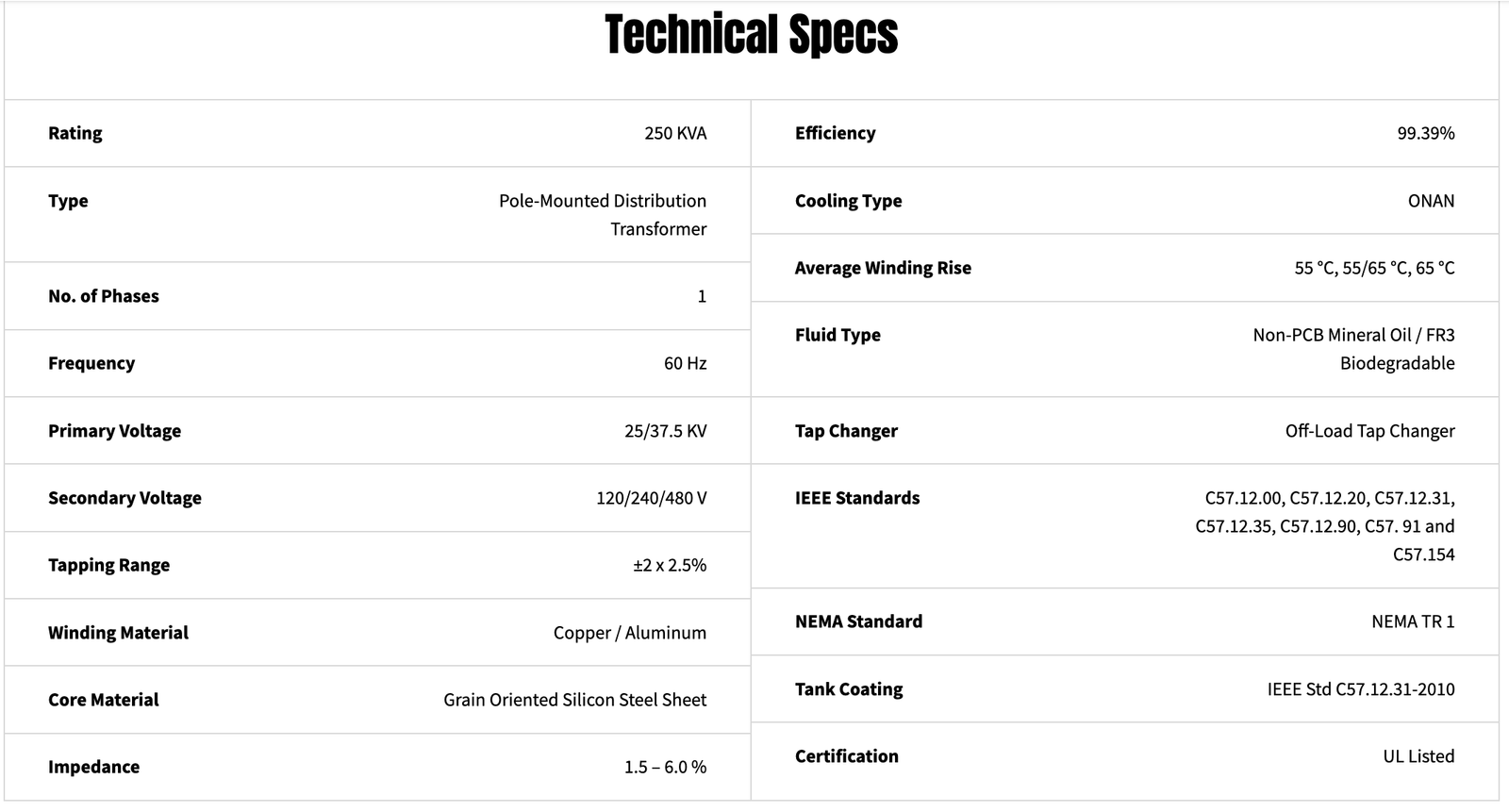
Pole Mounted vs Pad Mounted: Does it Affect Voltage Direction?
The physical design of the transformer—whether it is a pole mounted transformer or a pad mounted transformer—does not dictate its voltage direction. The choice between pole and pad mounting is determined by the project's physical infrastructure (overhead lines vs. underground cables), capacity requirements, and local utility regulations.
While the vast majority of pole mounted transformers are step down units delivering power to rural or residential loads, pad mounted transformers are frequently used in both configurations. A commercial building will use a step down pad mounted transformer, whereas a commercial solar array will use a step up pad mounted transformer to export generated power back to the utility.
Nina's Story: Confirming the Project Drawings
To resolve her ambiguous equipment list, Nina requested a meeting with the lead electrical engineer and reviewed the project's single-line diagrams (SLD). The SLD clearly showed power flowing from the local utility's 11kV overhead distribution lines down to the facility's 400V main switchgear.
With this confirmation, Nina knew she required standard step down distribution transformers. For the high-density commercial zones with underground wiring, she specified pad mounted step down transformers. For the peripheral industrial areas fed by overhead lines, she specified pole mounted step down transformers. She updated her RFQ to explicitly state: "Input (Primary): 11kV; Output (Secondary): 400V." This simple clarification removed all ambiguity for the manufacturers quoting the project.
Common RFQ Mistakes to Avoid
Nina's careful approach highlights several common pitfalls buyers must avoid:
- Using the Slash Format Without Context: Writing "33kV/400V" without specifying input vs. output.
- Assuming Reverse Operation is Safe: Purchasing an off-the-shelf step down transformer and wiring it backwards to use as a step up unit for a solar project. This can lead to severe inrush current issues, insulation failure, and tap changer malfunction.
- Omitting Vector Groups: The phase shift and delta and wye transformer connections between primary and secondary (e.g., Dyn11) change entirely depending on the power flow direction.
- Ignoring Grid Frequency: A transformer designed for 50Hz will overheat if run on a 60Hz grid, regardless of voltage direction.
When Step Up May Be Needed
Step up transformers are typically required in energy generation scenarios. This includes:
- Solar PV Plants: Using a 10kV solar step-up transformer to increase 480V or 800V inverter output to 10kV, 33kV, or higher for grid integration.
- Wind Farms: Stepping up turbine generator output to transmission levels.
- Industrial Co-Generation: Facilities that generate their own power and need to export excess energy back to the local utility.
When Step Down May Be Needed
Step down transformers are required wherever energy is consumed. Common applications include:
- Commercial Buildings: Stepping down utility distribution voltage to 400V or 480V for HVAC and lighting.
- Industrial Manufacturing: Powering heavy machinery and motor loads.
- EV Charging Stations: Reducing grid voltage to supply large DC fast chargers.
- Residential Neighborhoods: Providing 120/240V single-phase power to homes.
What Buyers Should Send Before Requesting Quotation
To ensure a fast, accurate, and technically sound quotation, buyers should prepare a complete specification package. Before contacting a supplier, gather the following information:
- kVA Rating: The total capacity required (e.g., 50kVA, 1500kVA).
- Primary Voltage (Input): The exact voltage coming from the power source.
- Secondary Voltage (Output): The exact voltage required by the load.
- Phase and Frequency: Single-phase or three-phase; 50Hz or 60Hz.
- Project Drawings: Single-line diagrams showing the electrical layout.
- Mounting Type: Pole mounted or pad mounted preference based on site infrastructure.
How TransformerGrid Helps Review Voltage Direction
At TransformerGrid, we understand that procurement professionals are managing dozens of complex tasks simultaneously. That is why our engineering team conducts a mandatory technical review of every inquiry before issuing a quotation.
If an RFQ lacks clarity regarding primary and secondary designations, we immediately engage with the buyer. By reviewing single-line diagrams, confirming the application type (e.g., solar vs. commercial building), and verifying local grid standards, we ensure that the transformer manufactured will perform flawlessly in the specified direction. We do not guess; we engineer solutions based on verified data.
Conclusion
The terms "step up" and "step down" define the very core function of a transformer. As Nina discovered, clarifying the voltage direction, primary input, and secondary output is the essential first step in the procurement process. By clearly defining these parameters and working with a supplier that prioritizes engineering review, buyers can eliminate specification errors, ensure grid compliance, and secure reliable power distribution for their projects, whether they need a pole mounted transformer or a pad mounted unit.
Frequently Asked Questions
1. What is the main difference between step up and step down transformers?
A step up transformer increases voltage from input to output, while a step down transformer decreases voltage from input to output.
2. Can a transformer be used in reverse (step down used as step up)?
Generally, no. While basic magnetic theory allows bidirectional flow, physical transformers are engineered with specific insulation grading, tap changers, and core designs optimized for one direction. Using it in reverse can cause dangerous inrush currents and insulation failure.
3. What does "Primary Voltage" mean?
Primary voltage refers exclusively to the input voltage connected to the power source, regardless of whether it is high or low voltage.
4. Do pole mounted transformers only step down?
While the vast majority are used to step down utility distribution voltage for end-users, manufacturers can build pole mounted transformers for specialized step up applications if required.
5. Why is voltage direction important in an RFQ?
It dictates how the manufacturer designs the internal windings, vector group, and insulation. Ambiguity can result in receiving equipment that cannot be safely connected to your project.
6. What is a generator step-up (GSU) transformer?
A GSU is a specific type of step up transformer used at power plants to immediately increase the generator's output voltage to match the high-voltage transmission grid.
7. How can I confirm the voltage direction for my project?
Review the project's single-line diagrams (SLD) with your electrical engineer to trace the flow of power from the source to the load.
Need to Confirm Your Transformer Specifications?
Send us your single-line diagrams, voltage requirements, and project details. Our engineering team will review your specifications to ensure you receive an accurate, reliable quotation. today.
Need a Transformer Quotation?
Contact our engineering team for a fast, accurate review of your project requirements.
For faster review, send your drawing, nameplate photo, kVA rating, voltage, project country and required delivery time if available. If you are not sure, contact us first — we can help you clarify the requirements.