What Makes a Pad-Mounted Transformer Quiet? Core, Flux Density, Clamping and Tank Design
Published July 22, 2026 · Prepared by the TransformerGrid technical editorial team · Project-specific requirements require manufacturer, utility and applicable-standard verification.
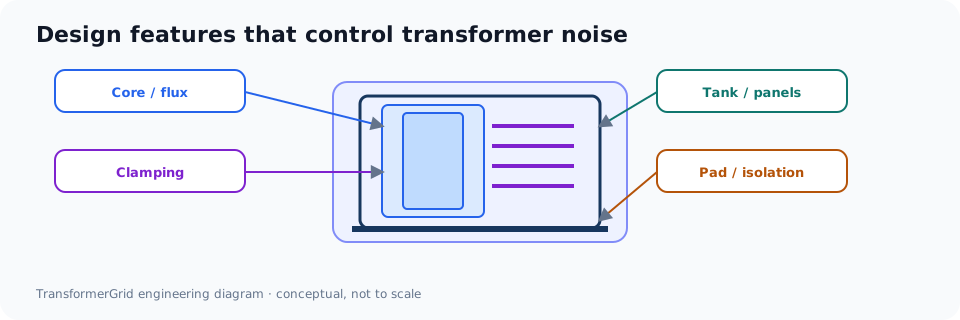
“Can you make it quieter?” is not a question that can be answered by thickening one panel. Transformer sound begins as electromagnetic excitation, travels through mechanical structures and then radiates through the tank, accessories, air and foundation.
The design chain behind acoustic performance
- Core flux and magnetostriction: magnetic material changes dimensions slightly under alternating flux. Material, joints, stress and flux density influence the excitation.
- Core and winding restraint: clamping affects how vibration is controlled and transferred; transport and assembly quality also matter.
- Load-related forces: winding current and leakage flux create electromagnetic forces in conductors and structural components.
- Tank and enclosure radiation: tank walls, doors, radiators and attachments can radiate vibration or amplify a frequency near a structural resonance.
- Cooling equipment: fans, pumps and airflow add mechanical and broadband sources when fitted and operating.
Every reduction target has design boundaries
Lower flux density may increase material, size and cost. Additional stiffness changes weight and manufacturing. Acoustic enclosures must not compromise heat dissipation, pressure relief, electrical clearances or maintenance. A buyer should therefore ask how the sound target interacts with losses, temperature rise, short-circuit strength, dimensions and cooling—not request the lowest isolated dB value.
TransformerGrid organizes those priorities as engineering inputs and asks the disclosed manufacturing partner to state the design basis, achievable test condition and exceptions. We do not label every unit “the quietest in the industry” without model-specific evidence. We do insist that a confirmed performance target belongs in the project documents and FAT plan.
Confidence is not exaggeration. It is the willingness to define the target, present the evidence and identify what still requires project confirmation. Read the full procurement guide or send rating, loss, size and sound priorities for a design clarification.